 |
|
|
|
|
||||||||||
|
|
|
||||||||||
|
Technical
Tips from Mark W. Persons |
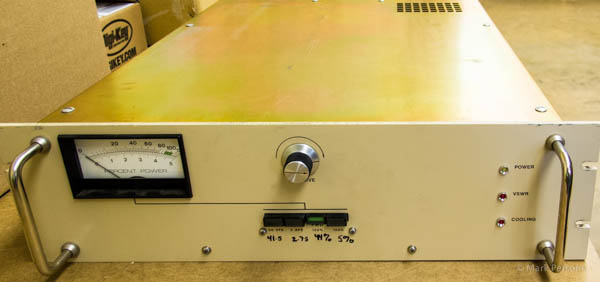 |
On the left is an IPA (Intermediate Power Amplifier) from a Continental Electronics 815A 5 KW FM broadcast transmitter. The transmitter uses a 4CX3500A PA (Power Amplifier) tube which needs about 100 watts RF of drive to produce 5 KW of RF output. |
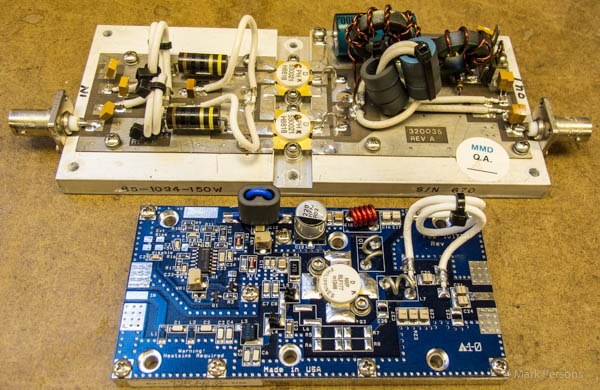 |
The original RF amplifier, in the
top of this photo, was made using two Motorola SRF3999 transistors. The
"S" in the part number indicates they were specially made for a particular
amplifier manufacturer. A variation of that amplifier used 530021
transistors. Unfortunately, neither of those transistors is available
today.
One fix for the situation is to replace the original amplifier with a model P155FM17 Pallet Amplifier module from Broadcast Concepts. This 150 watt unit uses only one power MOSFET transistor that runs cooler. Broadcast Concepts also had a model SD2941, which is capable of 175 watts of RF output if there is enough power supply to support it. Efficiency of the original amplifier was about 61%. This new amplifiers are closer to 73% depending on frequency and power level. The original amplifier is about eight inches long including the connectors. I removed the original two-transistor amplifier and replaced it with the Broadcast Concepts pallet. |
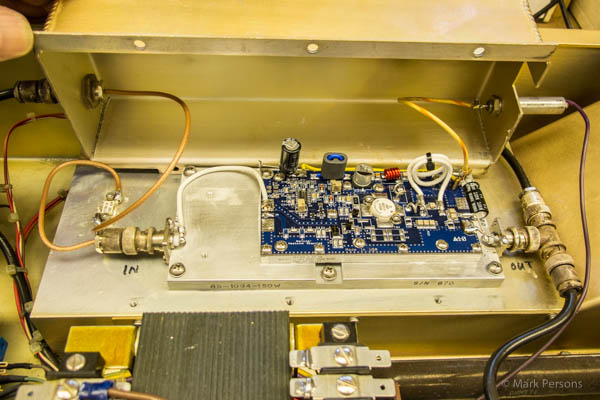 |
Six
4-40 threaded holes were drilled and tapped in the original amplifier plate and
silicone heat sink compound was used to thermally bond the two aluminum plates
together.
This is what it looked like before the cover was placed over the new pallet. A short coaxial cable was soldered between the input connector and the amplifier because the new one is shorter. In addition, two electrolytic capacitors were added to the +40 to +48 VDC power rail as bypasses to insure amplifier stability. This new amplifier requires less than 4 Watts of RF input to get 100 Watts of output at 95 MHz. Actual drive will vary with frequency. Since it is much less drive than the original design, you need to be careful when doing a changeover as you could accidentally overdrive the new amplifier and cause a transistor failure. Continental helped fix this problem in later versions when they added an input pad that raises the drive requirement to about 10 watts. |
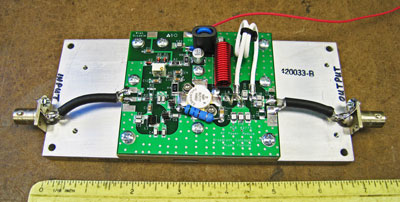 |
Here is an earlier conversion using a Broadcast Concepts pallet, which has since been updated to the models listed above. Since the replacement amplifier is the same width, but shorter, extensions were needed for the input and output cables. |
 |
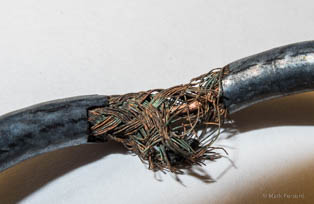 |
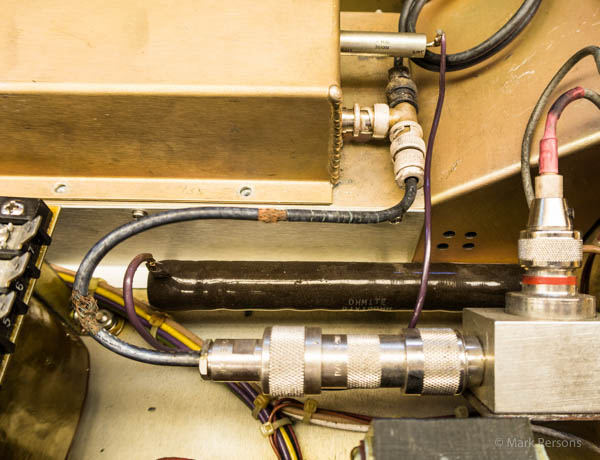
| There is a piece of RG-58/U coaxial cable leading from the IPA amplifier module to the directional coupler at the back of the chassis. This cable is directly over a 100 watt resistor, which produces a fair amount of heat, especially when the cooling fan quits. The cable will bake and fail with time causing a short circuit. The small photo above is a close-up view. Best to check for this whenever servicing a Continental 815A IPA chassis. |
|
The stories go on and on.
Stop in again sometime. I'll leave the soldering iron on for you.
|
|
Questions? Email Mark Persons: teki@mwpersons.com |